
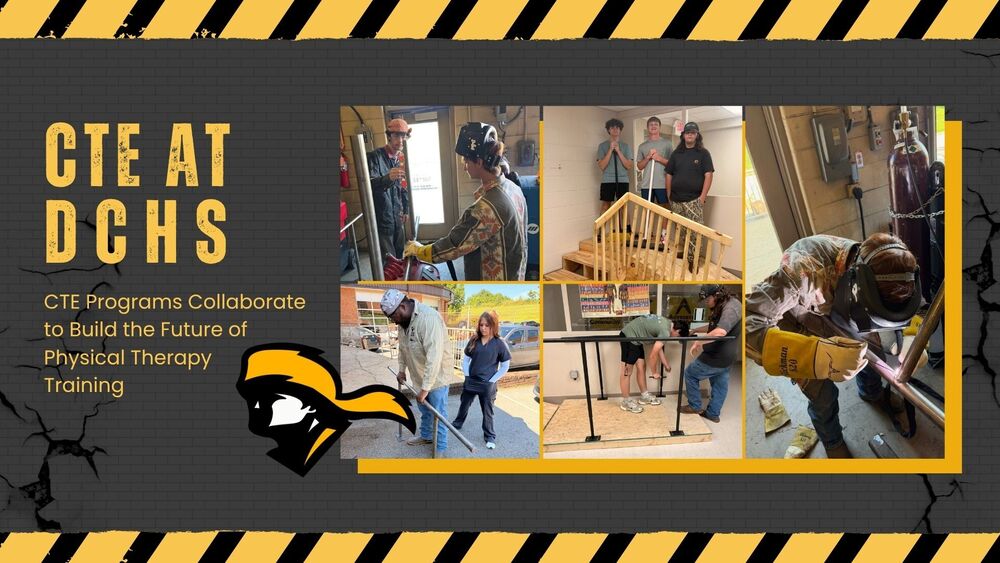
BUILDING PATHWAYS TO PATIENT CARE
Health Sciences • Physical Therapy Technician • Welding • Construction • Interdisciplinary CTE Collaboration
When Mrs. Clark’s new Physical Therapy Technician class in the Health Sciences Department needed hands-on equipment, David Crockett High School’s CTE programs came together to design, build, fabricate, and create a learning environment with a real purpose.
A Need Became an Opportunity
The new Physical Therapy Technician program at David Crockett High School needed equipment that would allow students to move beyond classroom theory and practice the skills they will use in patient care. Mrs. Clark’s Physical Therapy Technician class, part of the Health Sciences Department, needed a safe and functional space where students could learn how patients use assistive devices, practice ambulation, and work through everyday activities that can become challenging after an injury, illness, or change in mobility. Rather than simply purchasing equipment, Crockett’s Career and Technical Education programs turned the need into an authentic interdisciplinary learning opportunity.
CTE Collaboration in Action
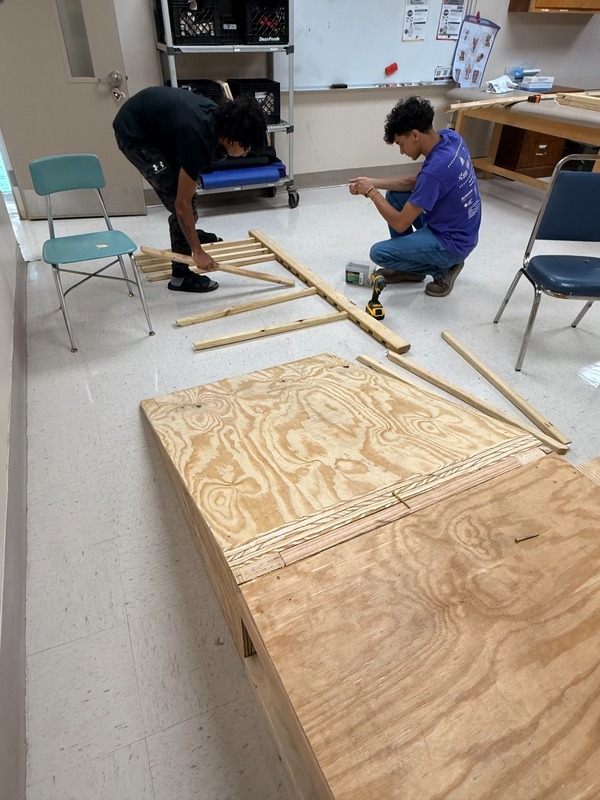
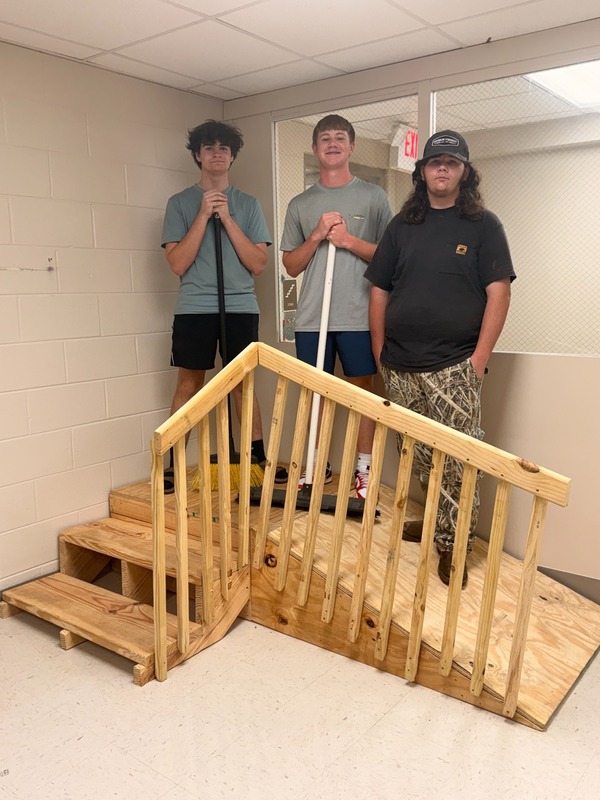
The project brought together students and instructors from multiple CTE programs. Mr. Lewis’s first-year students took on the challenge of constructing a functional ramp and set of steps. Through the project, students developed hands-on experience with measuring, construction, assembly, problem-solving, and learning how individual components come together to create a safe and useful structure. Students also learned about construction details such as step runners and balusters while creating equipment that would directly support another CTE program.
Welding Skills with a Purpose
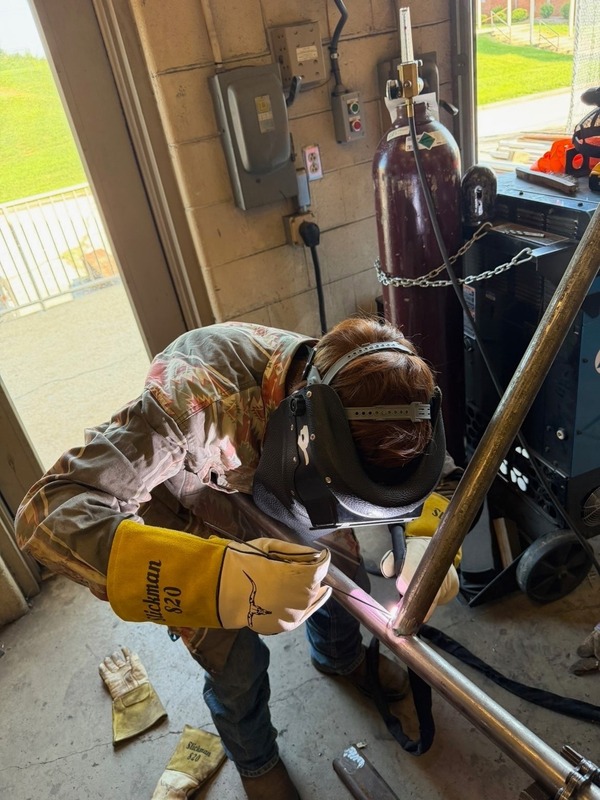
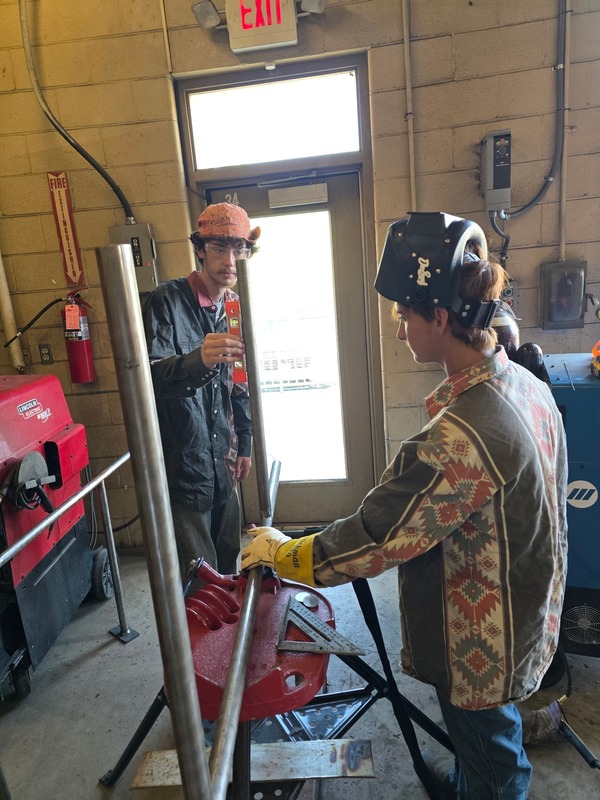
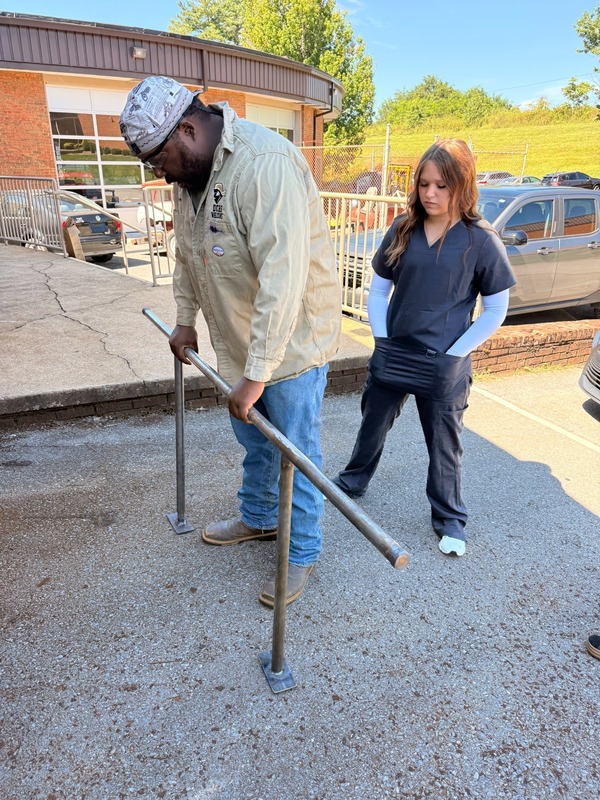
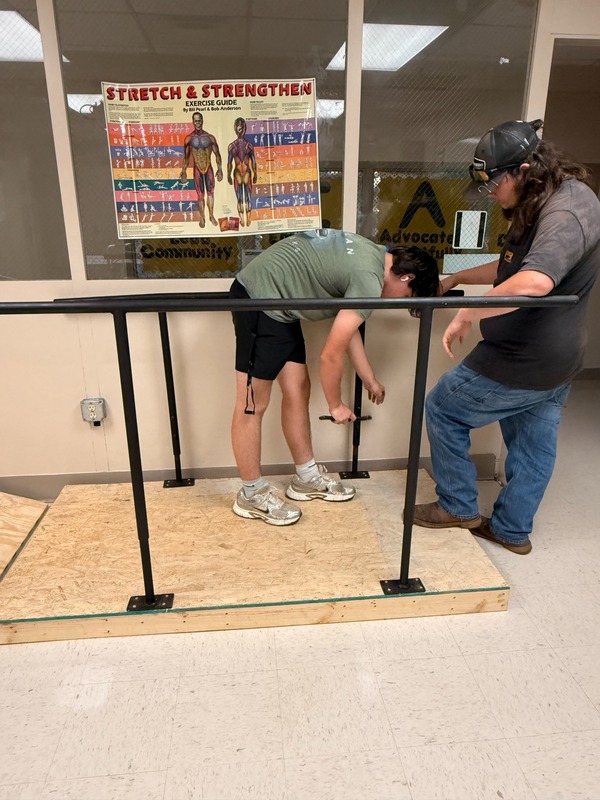
Mr. Gardner’s Welding students contributed another essential component by fabricating the parallel bars. Students applied welding and fabrication skills to create smooth, concave-round welds and sturdy hand grips. The bars were designed to be adjustable for different heights, giving the Physical Therapy Technician program a versatile tool for teaching mobility and ambulation skills. The welding portion of the project gave students an opportunity to see how precision, craftsmanship, safety, and attention to detail can directly support another classroom and ultimately benefit future patients.
From the Welding Shop to the PT Lab
The welding-shop photographs capture an important part of the learning process: students were not simply observing a professional skill—they were actively measuring, positioning, welding, checking, and assembling components that would become functional equipment for another program. That connection between the welding shop and Mrs. Clark’s Physical Therapy Technician classroom demonstrates the value of authentic, project-based CTE education.
From Equipment to Patient Care
For Mrs. Clark’s Physical Therapy Technician students, the finished equipment is more than a ramp, a set of steps, and parallel bars. It is a hands-on teaching tool. Students will use the equipment to practice safe ambulation, learn how assistive devices are used, work through mobility challenges, and simulate everyday activities of daily living. The equipment creates opportunities for students to practice communication, observation, safety awareness, and patient-support skills in a realistic environment.
Learning Across Programs
This project is a strong example of what makes Career and Technical Education so valuable. Students from different programs did not work in isolation; they contributed different skills to one shared goal. Construction students practiced building. Welding students practiced fabrication and precision. Physical Therapy Technician students gained equipment designed around the skills they need to develop. Together, the programs created a project that connects classrooms, careers, and real-world problem solving.
Preparing Students for the Future
Projects like this show students that CTE is not simply about completing an assignment—it is about creating, solving problems, communicating, collaborating, and producing something that has a purpose. The collaboration at David Crockett High School gives students a picture of how different careers and industries work together in the real world. Whether students are preparing for healthcare, welding, construction, electrical work, or another technical career, the ability to work as part of an interdisciplinary team is a valuable workforce skill.
CTE AT DAVID CROCKETT: LEARN IT. BUILD IT. USE IT.
David Crockett High School’s CTE programs provide students with opportunities to learn through hands-on projects, industry-connected skills, collaboration, and real-world problem solving. From the Health Sciences Department and Mrs. Clark’s Physical Therapy Technician program to Welding, Construction, Electrical, and other skilled-trade pathways, students are learning skills that prepare them for college, careers, certifications, and the workforce.
Big things happen when CTE programs work together! Students and instructors at David Crockett High School collaborated to create new equipment for Mrs. Clark’s Physical Therapy Technician class in the Health Sciences Department, including a ramp, steps, and adjustable parallel bars. Mr. Lewis’s first-year students helped construct the ramp and steps, while Mr. Gardner’s Welding students used their fabrication skills to create sturdy, adjustable parallel bars with smooth hand grips. The finished equipment will help future PT Tech students practice ambulation, assistive-device skills, mobility, and activities of daily living. This project is a powerful example of CTE in action—students learning by doing, collaborating across programs, and building something that will benefit others for years to come!